Showing posts with label free sewing pattern. Show all posts

Thursday, January 12, 2012

How to start knitting

learn to knit,how to knit,plain knit
the white one is a fluffy schrug I made mixing a white wool with eyelash yarn

This winter I'm loving mohair and other fluffy yarns to make nice and soft jumpers. Above you can see some of the jumpers I just knitted. Why you should learn to knit? I'll give you at least three reasons:
  1. knitting your own jumper means that you can design it from scratch: choose the color, the style, the decorations.  For example I'm really into pastel colours right now and mint in particular.
  2. knitting is like riding a bicycle, once you learn it you can't forget it
  3. it's easier than it seems.
Here's a few steps that will take you from 0 to make your jumper.
  1. Get your tools It all starts with a ball of wool and knitting needles. Knitting needles come in different sizes. Choose a yarn (not too thin at first), you'll find on its wrapper the dimensions of the needles required.
  2. Learn the basics:  Knit and purl stitch is everything you need to know. The easiest way to learn is to see someone doing it so the answer is You Tube! Click to learn how to knit and  how to purl stitch.
  3. plain classic knit
  4. Start easy: knit a scarf the best project to start with is a scarf (It's just a long rectangle!) and you'll kill two birds with one stone: you'll learn the technique and you'll make a terrific handmade Valentine's day gift for your boyfriend.
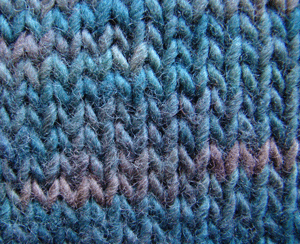
  5. How to obtain a plain classic knit (also called Stocking Stitch) Row 1: knit all stitches; Row 2: purl all stitches and then repeat.
  6. Now Get the pattern In order to make a jumper you need a pattern. There are many free patterns around that can fit your needs. Be sure to have the same size of needles indicated in that specific pattern so your jumper will fit right. Otherwise you can end up with a jumper that is too big or too small. 
  7. Make the sweater. Your sweater will have 4 pieces: the front, the back and the sleeves.
  8. Put it all together When all the pieces are ready it's time to sew them together! First sew the front and the back together then sew the sleeves.
  9. Here's an easy pattern you can start with, you can find this one and others like these at Lion Brand Yarn  (click on the pics to enlarge them)
  10. via Lion Brand Yarn 
    via Lion Brand Yarn 


Quest'inverno ho scelto lane mohair e altri filati "pelosi" per realizzare soffici maglioni (li potete vedere in queste foto). Ci sono almeno tre ragioni per imparare a lavorare a maglia:

  1. realizzare i vostri maglioni vi permetterà di sceglierne colore e stile.
  2. lavorare a maglia è come andare in bicicletta: una volta che avete imparato non potete dimenticarlo
  3. è più facile di quello che sembra.
Ecco alcuni step che vi aiuteranno a realizzare il vostro primo maglione
  1.  Gli strumenti per iniziare: Tutto comincia con un gomitolo di lana e da un paio di ferri. I ferri sono disponibili in diverse misure. Scegliete la lana (non troppo sottile per cominciare); troverete sulla confezione la dimensione dei ferri indicata per la sua lavorazione.
  2. Imparate i punti base:  Dritto e rovescio è tutto quello che dovete sapere. Il modo più semplice di apprendere è osservare qualcuno lavorare a maglia quindi la risposta più ovvia è You Tube. Cliccate per imparare il dritto e il rovescio
  3. plain classic knit
  4. Cominciate con un progetto facile e realizzate una sciarpa: la sciarpa è perfetta per cominciare, è un rettangolo e vi permetterà di prendere due piccioni con una fava: imparerete bene i punti base e realizzerete un perfetto regalo di S. Valentino per il vostro boyfriend.
  5. Come si realizza la trama classica: Alternate un ferro a punto dritto con uno a punto rovescio.
  6. Prendete un modello Per realizzare un maglione avrete bisogno di un modello. Online potrete trovare alcuni schemi gratuiti. Quando leggete un modello fate attenzione ad utilizzare i ferri della stessa dimensione indicata in modo da ottenere un maglione della giusta dimensione. Utilizzando ferri di dimensione diversa rischierete di ottenere un maglione troppo grande o troppo piccolo.
  7. Ora realizzate il maglione. Il vostro maglione sarà composto da 4 pezzi diversi: il davanti, il dietro più le maniche.
  8. Cucite tutto insieme Quando i diversi pezzi sono pronti li dovrete cucire insieme. Cucite il davanti con il dietro e poi cucite le maniche.
  9. Ecco un modello semplice da cui partire per realizzare un maglione. Potrete trovare questo e altri modelli sul sito Lion Brand Yarn  (cliccate sulle immagini per ingrandirle) altrimenti vi basterà cercare in edicola riviste specializzate sulla maglia.

Tuesday, January 10, 2012

Wrap sequin skirt with rounded hem DIY

alexander wang skirt diy,wrap skirt diy,wrap skirt tutorial,free sewing pattern,sewing tutorial,sequin skirt,skirt diy
wrap skirt diy,wrap skirt tutorial,free sewing pattern,sewing tutorial,sequin skirt

The sequin fabric I used to make the Peter Pan collar was just too cute and I had to use it again so I made this sequin wrap skirt with a rounded hem. Since sequins on this particular fabric are stitched on tulle I also lined it in pink. I hope you'll enjoy this DIY. If you like to wear sequins click to read my tips to wear sequins.
See how I made it!

Ho usato la stessa stoffa in paillettes del colletto Peter Pan per realizzare questa gonna a portafoglio con l'orlo arrotondato. Vediamo come l'ho realizzata e se amate indossare le pailettes cliccate per leggere i miei consigli su come indossare le paillettes.


You'll need a rectangle piece of fabric "skirt lenght" tall and "1,5 x hip width" wide.
Vi servirà un rettangolo di stoffa alto quanto la lunghezza della gonna e largo 1,5 volte la larghezza fianchi.


Piegate la stoffa a metà e ritagliate il profilo arrotondato
This is how the skirt looks like once lined
Visto che le mie paillettes sono cucite su tulle ho foderato la gonna.
Open your rectangle now 
Aprite il vostro rettangolo
Fold one side
Ripiegate un lato
Now the other. Pay attention: the intersection of the two sides, the rounded hem, must be at the middle.
Poi l'altro. Fate attenzione che l'orlo arrotondato cada al centro. Cucite come indicato.

Cucite un elastico sul dietro della gonna assicurando un fitting perfetto intorno alla vita!

If you liked this post click to see other DIYs cloths 
Se vi è piaciuto questo post cliccate per leggerne altri: Vestiti DIY

Sunday, December 18, 2011

The flapper dress DIY

flapper dress diy,diy,free pattern,tutorial

flapper dress diy,diy,free pattern,tutorial

Christmas is approcching and we're putting together our party outfit.
Last week we diy-ed a our glitter shoes and now it's time to diy our party dress.
The dress I made it's a flapper dress in a blush pink color and I used a sheer crepe georgette fabric.
If you saw the latest runways you maybe know that the flapper dress will be really trendy next spring, so we're making a dress we can wear a lot next season. See the step by step tutorial after the jump.

 Natale si avvicina ed è tempo di mettere insieme il nostro outfit. La settimana scorsa abbiamo realizzato le scarpe, ora è il momento di cucire il vestito che ho realizzato in stile charleston scegliendo un colore rosa cipria. Se avete seguito le ultime sfilate saprete che i ruggenti anni venti stanno per tornare di gran moda la prossima primavera quindi il vestito di oggi è pronto per essere sfoggiato durante il corso della prossima stagione. Troverete il tutorial step by step di seguito. 


spring 2012,flapper dress,gucci,etro,cavalli,alberta ferretti
low waist flapper dresses for spring 2012: Alberta Ferretti, Etro, Roberto Cavalli, Gucci
flapper dress pattern,flapper dress diy,diy,free pattern
The dress is basically a tube wide as your hips; the back is made a little smaller to obtain a slimming effect, sew the two rectangles at the sides and at the shoulders leaving opened the armholes and the neckline
Il vestito è in pratica un tubo della larghezza dei vostri fianchi, il dietro è tagliato più piccolo ottenendo un effetto snellente. Cucite i due rettangoli ai lati e sulle spalle lasciando aperte le maniche e  lo scollo.
to wear the dress easily slash the back at the middle and add a button 
You've now made the dress. I then added a funny ruffle at the bottom and a decorative belt
Per indossare il vestito eseguite un taglio al centro dietro e aggiungete un bottone per richiuderlo.
Il vestito è pronto, a questo punto ho aggiunto una ruche in fondo e una cinta decorativa.

How to make the ruffle:

how to make ruffles,ruffle tutorial
I then hemmed the ruffle and then gathered it: I stitched the edge of the ruffle loosely and then I pulled the thread. You'll see ruffles forming and you'll obtain this result
When you gather the fabric, it gets shorter so I cut 2 circles of fabric, one for the front and one for the back.
(I also gathered the shoulders)
Come si realizza la ruche:
Qui sopra troverete il modello per la ruche, una volta tagliato, eseguite l'orlo e poi arricciatelo. Per realizzare l'arricciatura basterà eseguire una filza lungo il bordo della ruche e poi tirare il filo, mentre la stoffa si arriccia vedrete diventare più evidenti le ruche. Arricciando la stoffa la lunghezza della ruche necessariamente si riduce; ho quindi tagliato due cerchi di stoffa, uno per la ruche sul davanti e una per la ruche sul dietro.
(Ho anche arricciato le spalle).


how to make ruffles,gathering technique,how to gathering

the ruffle sewed onto the dress
cucite la ruche sul vestito

How to make the belt: I cut a rectangle 10cm tall and 'hips width' long, I folded it in half and I sewed on the reverse and then I turned inside out. I then sewed onto the dress.

Come si realizza la cinta: Ho tagliato un rettangolo di stoffa della lunghezza dei fianchi e alto 10 centimetri. L'ho piegato a metà e ho realizzato la cucitura laterale a rovescio. Ho rivoltato la stoffa a dritto e ho cucito la cinta sul vestito.


How to make the bow: I cut another meter of fabric 10 cm tall, then I made the bow and I stitched it onto the dress.

Come si realizza il fiocco: ho tagliato un rettangolo di stoffa alto 10 cm e lungo un metro. Ho rifinito la striscia allo stesso modo della cinta. Ho eseguito un fiocco e l'ho cucito sul vestito.

et voilà! The dress is ready to wear!
Et voilà! Il vestito è pronto da indossare!